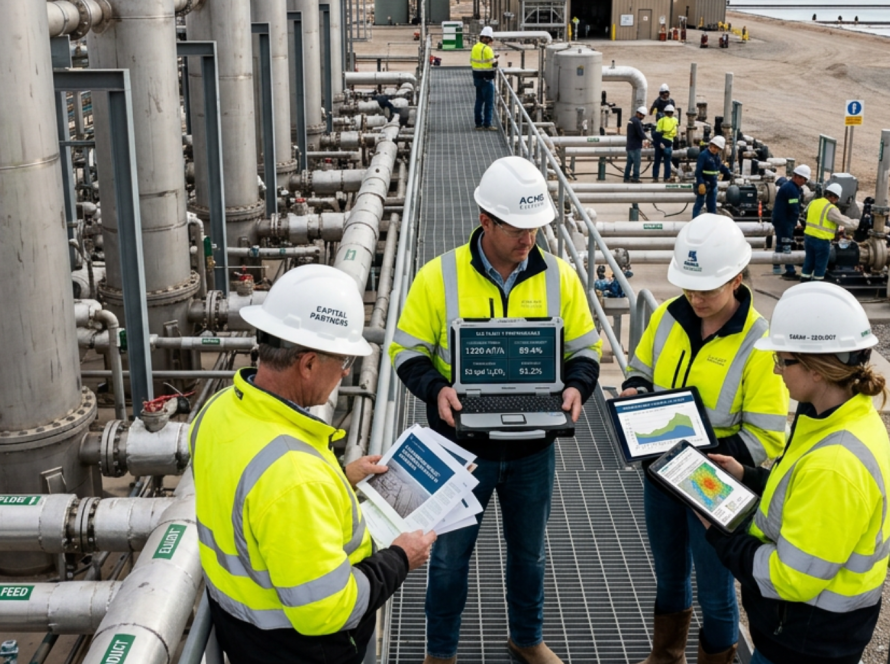
For nearly a decade, Direct Lithium Extraction (DLE) has been the “next big thing” in battery minerals. However, the first week of March 2026 has signaled a definitive shift. The industry has moved from technical validation to large scale infrastructure deployment. For C-suite executives and energy investors, the message is clear. DLE is no longer a speculative technology. It is a commercial reality.
The Capital Catalyst: De-risking the “Smackover”
The most significant indicator of DLE’s maturity is the arrival of traditional project finance. Standard Lithium’s recent announcement regarding its $1.5 billion Arkansas plant is a prime example. By securing backing from major export credit agencies, including the Export-Import Bank of the U.S., the company has demonstrated that DLE projects can now meet the rigorous “bankability” standards required for senior secured debt.
This is a critical turning point. Previously, DLE was funded primarily through venture capital or equity raises. The transition to debt financing suggests that lenders now view the adsorption and ion-exchange processes as industrially proven.
Regional Expansion: The North American and European Push
While South America’s “Lithium Triangle” remains a production powerhouse, this week’s news highlights a geographic diversification of the supply chain.
- The Canadian Corridor: With C$36.5 million in new federal funding, Alberta’s E3 Lithium is moving to “steel in the ground” for its commercial extraction columns. This federal support is a strategic play to secure a domestic “mine to battery” value chain in North America.
- The European Milestone: In Germany, the Altmark region discovery proves that DLE can revitalize “legacy” industrial zones. By repurposing former gas fields, companies like Neptune Energy are reducing the environmental footprint and the lead time of lithium production.
Operational Data: The New Benchmark for Performance
Data from active commercial pilots, such as Eramet’s Centenario-Ratones plant in Argentina, is setting new industry benchmarks. Recent updates indicate that these plants are achieving:
- 90% Lithium Recovery Rates: Compared to just 40–50% for traditional evaporation ponds.
- 1-Week Production Cycles: A radical reduction from the 18 months required for traditional methods.
- 60% Water Recycling: Addressing a primary ESG concern for institutional investors.
Strategic Hurdles for the C-Suite
As DLE scales, leadership teams must navigate several “Phase 2” challenges:
- Chemical Consistency: While DLE is efficient, the downstream refining of lithium chloride into battery-grade carbonate remains a complex chemical engineering task.
- Resource Ownership: The rush for brine rights in the Smackover Formation (Arkansas) and East Texas is intensifying, with oil majors like ExxonMobil and Equinor competing for a dominant land position.
- Regulatory Integration: New royalty frameworks, such as the recently approved 2.5% rate in Arkansas, are providing the “rules of the road” but also require sophisticated legal and tax planning.
The Bottom Line
The “Good News” for DLE this week is not just about a single discovery or a new patent. It is about the industrialization of the process. For heavy industry and automotive OEMs, the arrival of commercial DLE means a more resilient, faster, and more sustainable lithium supply. The next 18 months will define which players successfully scale their “pilot learnings” into “production profits.”